See it in action
One rep, start to finish
Read a hidden chart, trade it, then Reveal for a graded debrief — here's the whole loop in motion.
Find a statistical edge in Edge Lab, bottle it into a universe of names that fit it, then replay that universe in the trainer — random or in chronological order, ticker & date hidden. Lock in the execution and the patterns that keep showing up across your setups.
Find the edge → build your universe → replay it, random or linear, until execution is automatic.
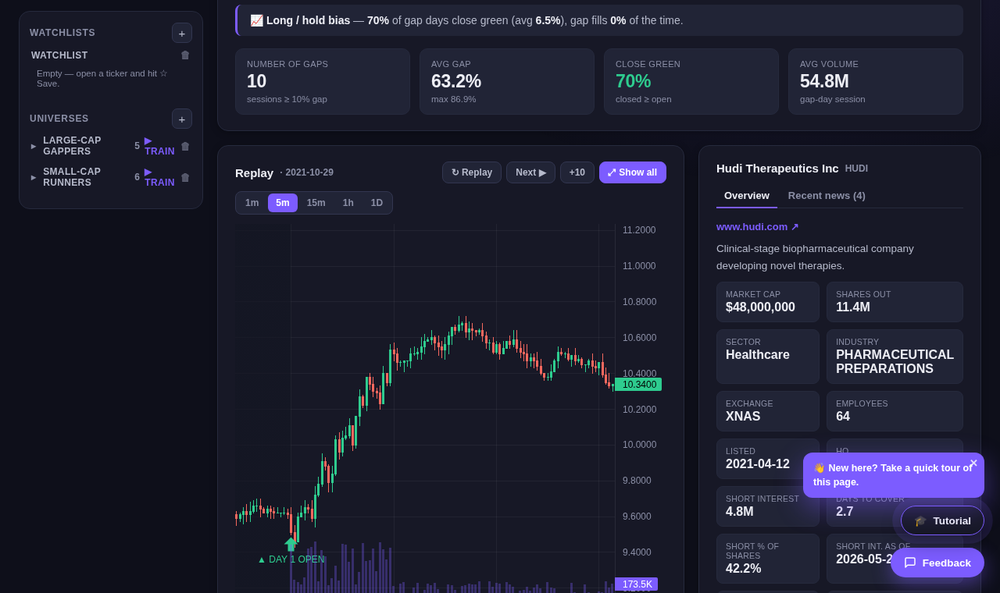
Search any stock and Edge Lab scans its whole history — the base rates, the average path, a replay of any gap day, plus the company's profile, overview & news. Your read, grounded in real statistics.
| Gap date | Gap % | Day-1 | Gap fill | Day-2 |
|---|---|---|---|---|
| 2026-05-22 | +57% | +52.6% | Held | +9.1% |
| 2026-03-04 | +31% | +8.2% | Filled | -2.6% |
| 2025-11-18 | +22% | -4.1% | Filled | +3.4% |
Find an edge in Edge Lab, build a universe of the names that fit it, then replay that universe in the trainer — random or in order — until the read and the execution are automatic.
Search any stock and see how its gaps actually behaved — gap-fill, Day-1 move, follow-through. Pin down a setup with real, favorable base rates. Trade odds, not hunches.
Turn that edge into a basket — filter by cap, volume, price, sector and your own gap size. Save it as the pool you'll drill, set to the playback you want: random or linear.
Drill your universe in the trainer — random reps, or linear, day by day through time. Ticker & date hidden, so you lock in the execution and the patterns that keep recurring across your names.
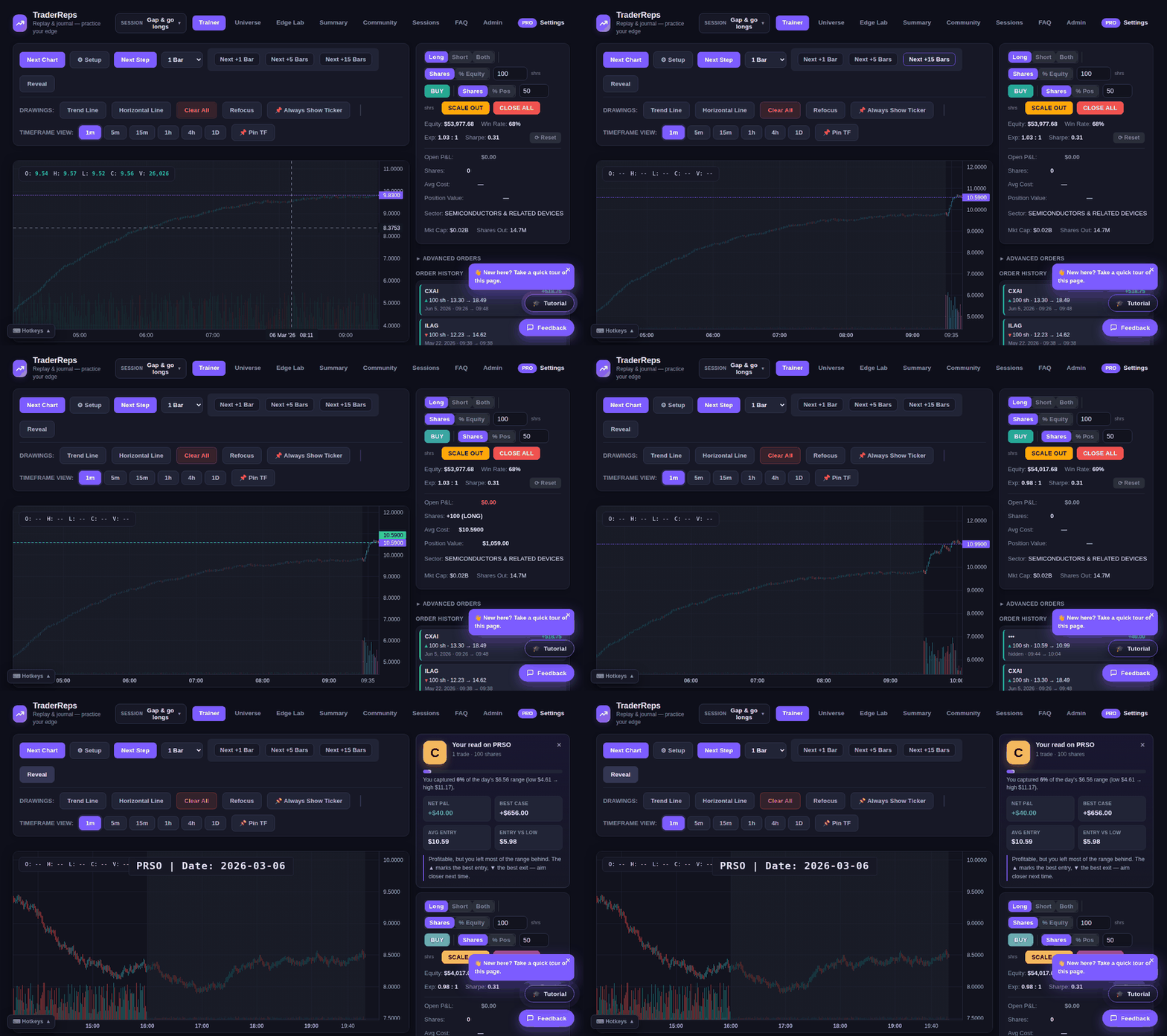
Read a hidden chart, trade it, then Reveal for a graded debrief — here's the whole loop in motion.
Every card is a real stock on a real day, stripped of everything that would let you cheat. You make the call before the reveal, the same way you have to in a live market.
A random historical setup loads with its identity hidden. All you see is price and volume — no ticker, no date, no outcome to anchor you.
Advance the chart one bar at a time, mark up levels, and place BUY/SELL limit orders. Scale out, manage risk, and let the trade play out bar-by-bar.
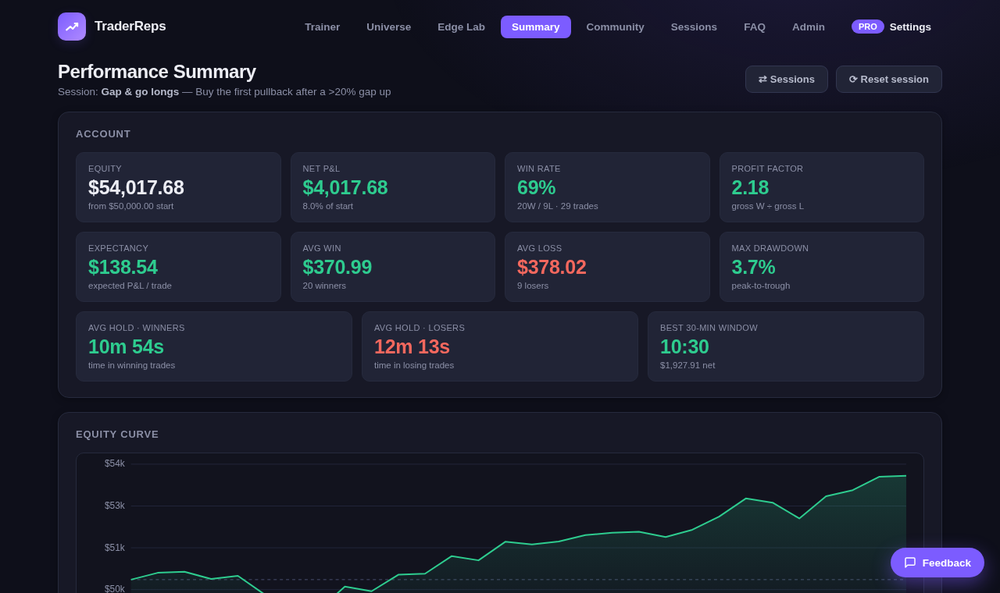
Unmask the ticker and date, see your equity, win rate, expectancy and Sharpe update, then pull the historical gap stats for that name. Next card.
Edge Lab gives you the statistical edge; the trainer gives you the execution. Most "education" hands you setups in hindsight, where everything looks obvious — we remove hindsight so you practice the skill that actually pays: deciding under uncertainty.
You can't lie to yourself about a setup when you don't know how it ends. Blind replay forces an honest read every single time.
You'll see more clean and messy setups in a focused session than in months of live screen time — deliberate reps, on demand.
Equity curve, win rate, expectancy and Sharpe track every decision, so you improve against numbers instead of vibes.
The deck is real high-volume movers and gap days — the volatile names where pattern recognition matters most, not sleepy blue-chips.
"It's TSLA, it'll bounce." Hiding the ticker strips away the story and the ego, leaving only what the chart is actually telling you.
Markets closed? Doesn't matter. Reps are available 24/7, so you keep your edge sharp between live sessions.
Don't just take a random deck — shape the universe and keep a separate account for every strategy you're working on.
Filter thousands of names by market cap, volume, price, sector and your own gap size, then save the basket. The trainer draws blind setups from exactly that list.
Drill your universe in any order for pure pattern reps — or linearly, living it day by day through time and resuming where you left off. Two ways to build the read.
Go beyond the curated gappers: build from a full US-equities snapshot — every active ticker, not just the usual movers.
Keep separate paper accounts — "gap-and-go shorts", "morning longs" — each with its own balance, trades and stats, so results never blur together.
Read charts free every day. Step up for unlimited reps, deeper history, more sessions, and Edge Lab.
Pricing shown is illustrative — payment checkout coming soon.
Stop trading the story and start trading the chart. Build the eye that knows what it's looking at.
Start training free →